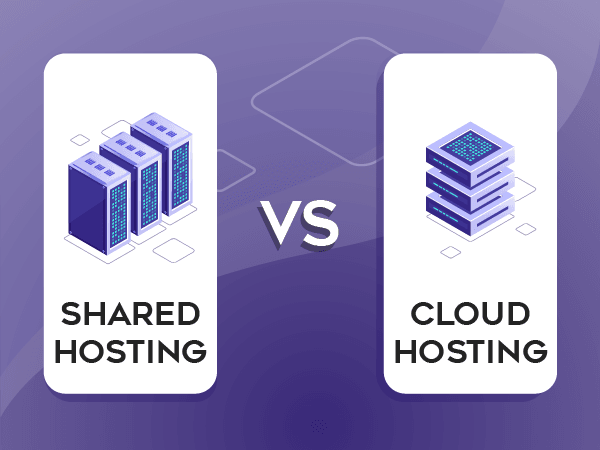
So, you’re ready to launch your website. You’ve got the domain name, the idea, and the drive to make it happen. But then you hit the hosting page of some provider and suddenly you’re staring at a wall of plans, technical terms, and pricing tiers that make your head spin. Two options keep popping up everywhere:
- shared hosting and
- cloud hosting.
And you’re probably wondering: what’s the difference? and which one is actually going to hold up when it matters?
Don’t worry. By the end of this post, you’ll know exactly what both options mean, who they’re best for, and which one deserves your money.
First, let’s talk about shared hosting.
Imagine moving into a big apartment building. You have your own unit, but you share the building’s water supply, electricity, and elevator with everyone else. That’s shared hosting in a nutshell.
When you sign up for shared hosting, your website lives on a physical server alongside hundreds, sometimes thousands of other websites. You all share the same resources, the CPU power, the RAM, the bandwidth, and the storage. The hosting provider manages everything behind the scenes, so you don’t need any technical knowledge to get started.
This makes shared hosting the go-to option for beginners, bloggers, and small business owners who are just getting their feet wet online. It’s affordable, easy to set up, and most providers throw in extras like a free domain name, a website builder, and one-click WordPress installation. For as little as a few ringgits a month, you can have a live website running before lunch.
But here’s the catch, because you’re sharing resources with so many other websites, your performance depends heavily on your neighbours. If another website on your server suddenly gets a flood of traffic, it can slow your site down too. This is often called the “noisy neighbour” problem, and it’s one of the biggest frustrations shared hosting users face.
Shared hosting also comes with limits on how much you can customize your server environment. You can’t install certain software, tweak server settings, or scale up your resources on demand. What you see in the plan is mostly what you get.

Now, Let’s Break Down Cloud Hosting
Cloud hosting is a different animal entirely. Instead of one physical server, your website runs across a network of multiple servers working together. Think of it like a power grid. If one part of the grid goes down, the rest of the network picks up the slack and keeps the lights on.
With cloud hosting, your resources are not tied to a single machine. If your website suddenly gets a spike in traffic. Say, you go viral on social media or run a big promotional campaign, the cloud can automatically pull in more resources to handle the load. This is called scalability, and it’s one of the biggest reasons businesses love cloud hosting.
Because your site is spread across multiple servers, you also get much better reliability and uptime. If one server experiences a hardware failure, your website simply shifts to another server in the network. There’s no single point of failure, which means your site stays up even when something goes wrong on the backend.
Cloud hosting also gives you more control and flexibility. You can often scale your CPU, RAM, and bandwidth up or down based on your actual needs, and you typically only pay for what you use. This makes it a smart choice for growing businesses, online stores, and developers who need a reliable and flexible environment.
The trade-off? Cloud hosting usually costs more than shared hosting, and the pricing structure can sometimes feel unpredictable if your traffic fluctuates a lot. It also comes with a slightly steeper learning curve, though many providers have made their dashboards much more beginner-friendly in recent years.
Head-to-Head: How They Stack Up
When it comes to price, shared hosting wins hands down. You can get a solid shared hosting plan for a fraction of what cloud hosting costs. But price isn’t everything, especially when your business starts to grow.
In terms of performance, cloud hosting is the clear winner. Your site loads faster, handles traffic spikes better, and stays online more consistently. Shared hosting can perform well under normal conditions, but it tends to buckle under pressure.
For security, cloud hosting also has an edge. On shared hosting, if one website on your server gets hacked or infected with malware, there’s a small but real chance it could affect your site too. Cloud hosting environments are more isolated and easier to secure.
When it comes to ease of use, shared hosting takes the win. The control panels are simple, the setup is quick, and you don’t need to understand anything technical. Cloud hosting is getting easier, but it still requires a bit more hands-on management.
So, Which One Should You Choose?
Here’s the honest answer. It depends on where you are in your journey.
If you’re starting a personal blog, a portfolio site, or a small business website and you expect modest traffic, shared hosting is perfectly fine. It’s cost-effective, easy to manage, and will serve you well until you outgrow it. Think of it as renting a small apartment when you’re just starting out. It does the job, and it doesn’t drain your wallet.
If you’re running an e-commerce store, a growing startup, or any kind of website where downtime costs you money, cloud hosting is the smarter investment. The reliability, speed, and ability to scale make it worth every extra dollar. Think of it as moving into a place with your own utilities, more responsibility, but also much more control and peace of mind.
And here’s a pro tip: many people start on shared hosting and migrate to cloud hosting once their traffic grows. There’s absolutely nothing wrong with that approach. Start where you are, and upgrade when your needs demand it.
The Bottom Line
Both shared and cloud hosting have their place in the web hosting world. Neither one is universally better, the right choice depends on your goals, your budget, and the stage your website is at right now.
Shared hosting is your budget-friendly, beginner-safe starting point. Cloud hosting is your performance-first, growth-ready upgrade. Know where you stand today, keep an eye on where you’re heading tomorrow, and you’ll make the right call.
Whatever you choose, just make sure your hosting isn’t the thing holding your business back. Because in the online world, speed, reliability, and uptime aren’t just technical details, they’re the foundation your entire business runs on.




You must be logged in to post a comment.