
There are industries where a slow website is just an inconvenience. And then there are industries where a slow website, a data breach, or an hour of unexpected downtime can destroy a company’s reputation, trigger regulatory investigations, and put real people’s lives or financial security at risk.
Fintech and healthcare are exactly those kinds of industries.

When you are handling someone’s bank account, investment portfolio, insurance claims, or medical records, the stakes could not be higher. The people trusting you with that information are not just customers. They are patients, account holders, and individuals whose most sensitive personal data lives inside your systems. They deserve the highest possible standard of protection, performance, and reliability. And that standard begins with the infrastructure your business is built on.
That infrastructure, for the vast majority of serious fintech and healthcare companies, is a dedicated server.
What Makes Fintech and Healthcare Different from Other Industries
Most businesses can get away with shared or cloud hosting for a long time. A marketing agency, a lifestyle blog, or even a mid-sized e-commerce store can function perfectly well on a managed cloud environment without ever running into serious problems.
But fintech and healthcare operate in a completely different environment. Both industries deal with data that is classified as highly sensitive under the law. Both are governed by strict regulatory frameworks that dictate exactly how data must be stored, protected, transmitted, and accessed. And both face consequences for compliance failures that go far beyond a slap on the wrist.
In healthcare, a single data breach can expose thousands of patient records containing diagnoses, prescriptions, mental health histories, and personal identification information. In fintech, a security failure can expose financial account data, transaction histories, credit scores, and personally identifiable information (PII) that can be used for identity theft and financial fraud.
The level of trust these industries ask from their customers is extraordinary. And extraordinary trust demands extraordinary infrastructure.
The Problem with Shared and Cloud Hosting in These Industries
Before understanding why dedicated servers are preferred, it helps to understand why the alternatives fall short for these specific industries.
Shared hosting puts your data on the same physical server as dozens or hundreds of other companies. In most industries, this is simply a performance concern. In healthcare and fintech, it is a compliance nightmare. Regulatory standards in both industries require strict data isolation, meaning your sensitive data must not share physical infrastructure with other organizations whose security practices you cannot control or verify.
Cloud hosting addresses many of the performance and scalability limitations of shared hosting, but it introduces its own set of challenges for regulated industries. Most public cloud environments operate on a multi-tenant architecture, where multiple customers share the same underlying physical hardware even if their environments are logically separated. For companies subject to strict compliance requirements, this level of separation is often not sufficient to satisfy regulators.
There is also the matter of data residency. Both fintech and healthcare regulations in many countries require that sensitive data be stored within specific geographic boundaries. Public cloud providers often distribute data across multiple regions and data centers by default, which can create serious data sovereignty issues for regulated businesses.
A dedicated server solves all of these problems at once. Your data lives on hardware that belongs exclusively to you. No other company shares your physical server. You control exactly where your data is stored, how it is accessed, and who can see it.
Regulatory Compliance Is Not Optional
In most industries, compliance is something you work toward gradually. In healthcare and fintech, compliance is the baseline requirement before you are even allowed to operate.
Healthcare companies in the United States must comply with HIPAA (Health Insurance Portability and Accountability Act), which sets strict standards for how Protected Health Information (PHI) must be stored, transmitted, and safeguarded. In Europe, healthcare data falls under the combined jurisdiction of GDPR (General Data Protection Regulation) and various national health data laws. Failing to comply with these regulations can result in fines reaching into the tens of millions of dollars, forced audits, and in severe cases, criminal charges for executives.
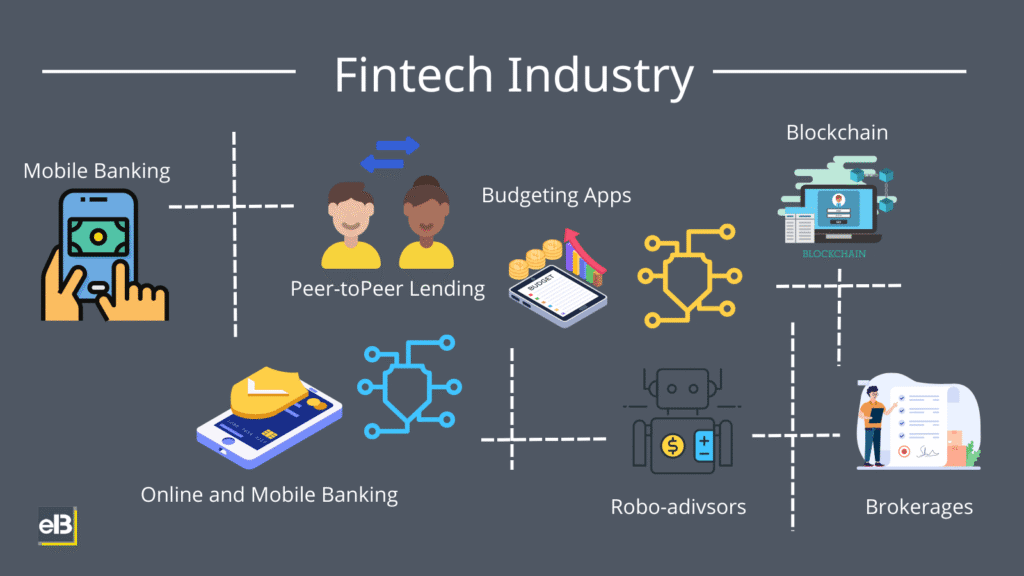
Fintech companies face an equally demanding regulatory landscape. In the United States, they must navigate requirements from bodies like the SEC (Securities and Exchange Commission), FINRA (Financial Industry Regulatory Authority), and the CFPB (Consumer Financial Protection Bureau). Internationally, regulations like PSD2 (Payment Services Directive 2) in Europe and MAS (Monetary Authority of Singapore) guidelines in Asia-Pacific create additional layers of compliance obligations. All of these frameworks place explicit requirements on how financial data must be handled, protected, and audited.
Dedicated servers make it significantly easier to meet these requirements compared to shared or public cloud environments. With a dedicated server, you have full control over your security configurations, your access controls, your audit logging, and your data encryption practices. You can implement exactly the safeguards required by your specific regulatory framework without being constrained by the limitations of a shared infrastructure.
Data Security on a Different Level
The security requirements of fintech and healthcare go far beyond what standard hosting environments are designed to provide. It is not enough to simply have an SSL certificate and a basic firewall. These industries require a layered, comprehensive security architecture that protects data at every possible point of vulnerability.
On a dedicated server, companies have the freedom to implement security measures that are specifically tailored to their industry’s requirements. This includes full disk encryption to protect stored data even if the physical hardware is ever compromised. It includes end-to-end encryption for all data transmitted between systems, ensuring that sensitive patient or financial information cannot be intercepted in transit.
Dedicated servers also allow companies to implement strict network segmentation, which means dividing the server’s network into isolated zones so that even if one part of the system is compromised, attackers cannot move freely through the entire network. This is particularly important in healthcare environments where clinical systems, administrative systems, and patient-facing applications should never have unrestricted access to each other.
Intrusion Detection Systems (IDS) and Intrusion Prevention Systems (IPS) can be deployed and configured precisely on a dedicated server to monitor network traffic and automatically block suspicious activity. Security Information and Event Management (SIEM) systems can be integrated to collect and analyze security data in real time, providing the kind of continuous monitoring that regulators expect from companies handling sensitive data.
For fintech specifically, dedicated servers provide the controlled environment needed to implement tokenization and encryption key management systems that protect payment data in compliance with PCI DSS standards. These are systems that simply cannot be configured with the same level of precision and control in a shared hosting environment.
Performance Under Pressure Is Non-Negotiable
In fintech, speed is not just about user experience. It is about accuracy, reliability, and competitive advantage. High-frequency trading platforms, real-time payment processing systems, and algorithmic trading engines all require processing power that can handle millions of operations per second with absolute consistency.
A dedicated server provides the raw computing power, low network latency, and guaranteed resource availability that these applications demand. There are no shared resources to compete for, no noisy neighbors to slow things down, and no unpredictable performance variations caused by other tenants on the same infrastructure.
In healthcare, performance is equally critical but for different reasons. Electronic Health Record (EHR) systems need to retrieve patient data instantly so that doctors and nurses can make timely clinical decisions. Medical imaging platforms that store and process MRI scans, CT scans, and X-ray images work with enormous file sizes that require both fast storage and significant processing power. Telehealth platforms that support real-time video consultations between patients and clinicians need consistently low latency and high bandwidth to function properly.
When a healthcare provider cannot access a patient’s medical history because the system is running slowly, that is not just a technical problem. It is a potential patient safety issue. Dedicated servers eliminate the performance uncertainty that comes with shared environments, ensuring that critical healthcare applications perform reliably every single time they are needed.
Total Control Over the Server Environment
One of the most significant advantages of a dedicated server for both fintech and healthcare companies is the level of control it provides over the entire server environment.
With shared or cloud hosting, you are working within the boundaries set by your hosting provider. You can install certain software, configure certain settings, and customize certain aspects of your environment. But there are always limitations. You cannot modify the underlying operating system at a deep level. You cannot install software that conflicts with other tenants on the same server. You cannot control how your hardware resources are allocated or prioritized.
On a dedicated server, all of those limitations disappear. You have root access to the entire server, which means you can install any software you need, configure any setting you require, and optimize the entire environment specifically for your application’s needs.
For healthcare companies, this might mean installing a HIPAA-compliant database system, configuring a custom audit logging solution that tracks every access to patient records, or setting up a specialized backup and disaster recovery system that meets the data retention requirements of their regulatory framework.
For fintech companies, this level of control makes it possible to install and configure real-time transaction monitoring software, deploy custom fraud detection algorithms, and implement multi-layer authentication systems that protect both customer accounts and internal administrative access.
This depth of customization is simply not possible in environments where you share infrastructure with other organizations.
Uptime and Reliability That Businesses Can Depend On
Both fintech and healthcare are industries where availability is directly tied to critical outcomes. A banking app that goes down during business hours creates panic among customers and potential regulatory scrutiny. A hospital’s patient management system going offline during a busy shift creates chaos that can affect patient care.
Dedicated servers support the kind of high availability architecture that these industries require. Companies can set up redundant power supplies, RAID storage configurations that protect against hard drive failure, and network redundancy with multiple internet connections from different providers so that if one connection fails, traffic automatically reroutes through another.
Many fintech and healthcare companies running dedicated servers also implement geographic redundancy, maintaining identical server environments in multiple data centers in different locations. If one data center experiences an outage due to a natural disaster, a power failure, or any other catastrophic event, operations automatically fail over to the secondary location with minimal disruption.
This level of redundancy and reliability architecture is something that these companies have complete control over when running on a dedicated server. They are not dependent on a cloud provider’s availability zones or a shared hosting company’s maintenance schedules. They define their own availability standards and build the infrastructure to meet them.
Audit Trails and Accountability
Both HIPAA and financial regulations require companies to maintain detailed records of who accessed what data, when they accessed it, and what actions they took. This is known as an audit trail, and it is a fundamental requirement of operating in these industries.
On a dedicated server, companies can implement comprehensive audit logging systems that capture every data access event, every configuration change, every login attempt, and every administrative action taken on the server. These logs can be stored securely, protected from tampering, and made available to regulators during audits.
In a shared hosting or public cloud environment, the level of logging granularity available to individual customers is often limited by the platform. You can see what happens within your application, but you may not have visibility into events at the infrastructure level. For industries where regulators expect complete transparency into how data was handled, this lack of visibility can create serious compliance gaps.
A dedicated server eliminates those gaps entirely, giving compliance teams and internal auditors the complete, tamper-proof records they need to demonstrate that data handling practices meet every regulatory requirement.
The Financial Logic of Dedicated Servers in These Industries
Some businesses hesitate when they see the pricing of a dedicated server compared to shared or cloud hosting. It is understandable to look at the cost difference and wonder whether it is truly justified.
For fintech and healthcare companies, the financial logic is actually very clear.
Consider the alternative. A single HIPAA violation in the United States can result in fines ranging from thousands to millions of dollars per violation, depending on the level of negligence involved. A data breach in the financial sector can trigger regulatory fines, class action lawsuits, and reputational damage that costs far more to recover from than the entire annual cost of premium dedicated hosting.
Beyond risk mitigation, there is also the matter of competitive positioning. In both industries, security, reliability, and compliance are not just operational necessities. They are selling points. Healthcare providers and financial institutions that can credibly demonstrate that they use enterprise-grade infrastructure to protect their clients’ data are building trust that translates directly into customer acquisition and retention.
The cost of a dedicated server is not an expense. For fintech and healthcare companies, it is a strategic investment in the trust, compliance, and operational excellence that their businesses are built on.
Choosing the Right Dedicated Server Provider
Not all dedicated server providers are created equal, and for fintech and healthcare companies, the selection process requires careful evaluation of several important factors.
Look for providers whose data centers hold recognized certifications such as ISO 27001 for information security management, SOC 2 Type II for security and availability controls, and HIPAA-compliant hosting designations if you are in the healthcare space. These certifications are not just badges. They represent rigorous independent assessments of a provider’s security and operational practices.
Evaluate the provider’s physical security measures, including biometric access controls, 24-hour surveillance, and strict visitor management policies. Your server’s digital security is only as strong as the physical security of the facility it lives in.
Look for providers that offer dedicated account managers and specialized technical support teams who understand the compliance and security requirements of your industry. A support team that has experience working with healthcare or fintech clients will be far more valuable in a crisis than a generic support queue.
Finally, ensure that any dedicated server provider you choose is willing to sign a Business Associate Agreement (BAA) if you are in healthcare, or provide the necessary contractual compliance documentation required by your specific regulatory framework. A provider that is not willing to enter into these agreements is one that is not prepared to operate at the level your industry requires.

The Bottom Line
Fintech and healthcare companies do not choose dedicated servers simply because they can afford premium infrastructure. They choose dedicated servers because the nature of their business, the sensitivity of the data they handle, and the regulatory environment they operate in demand nothing less.
A dedicated server is not just a place to host a website. For these industries, it is the foundation of their entire data security strategy, their regulatory compliance framework, and their promise to customers and patients that their most sensitive information is being handled with the absolute highest standard of care.
In industries where trust is everything and failure is not an option, a dedicated server is not a luxury. It is the only responsible choice.



You must be logged in to post a comment.